Quick Facts
From the show
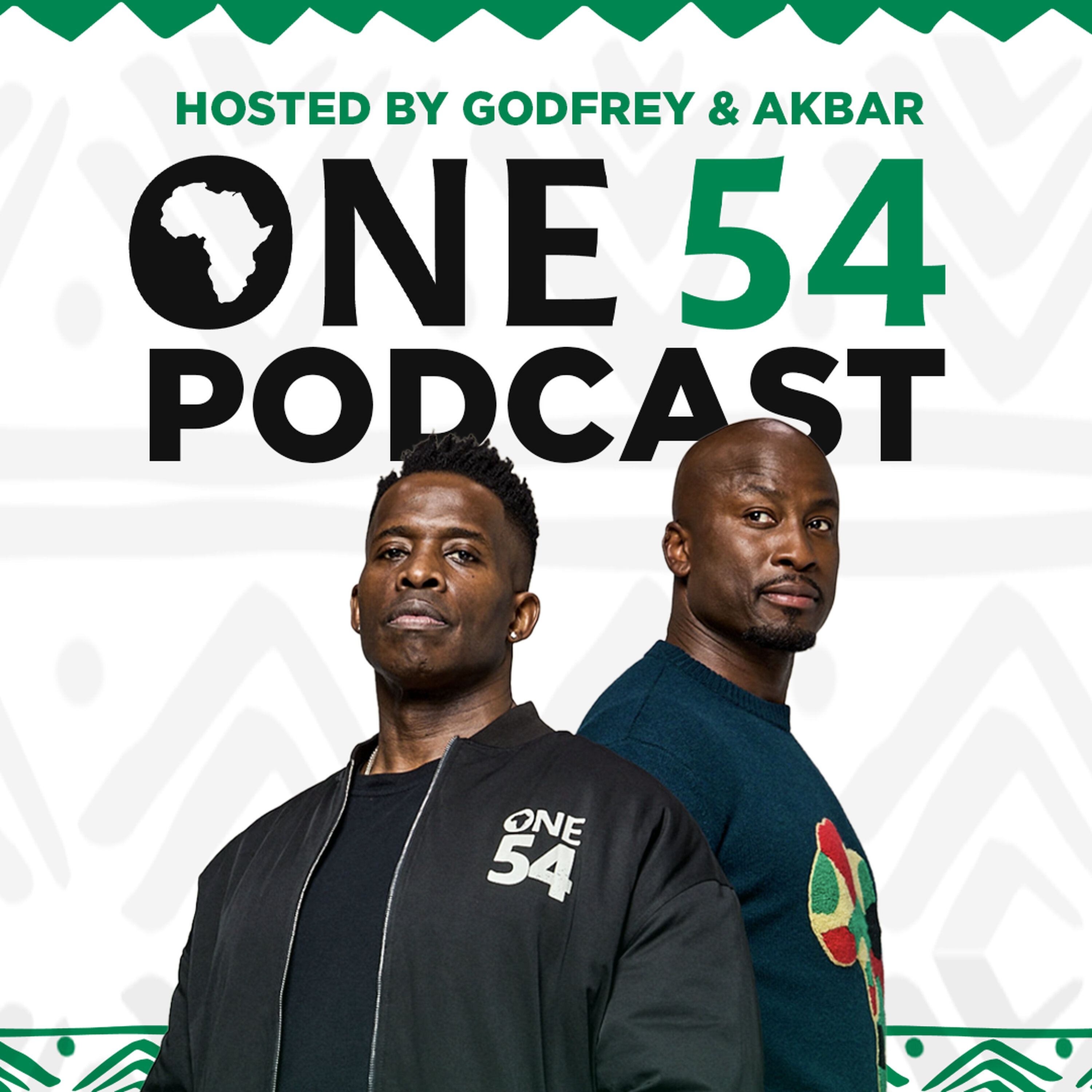
Akbar Gbajabiamila and Godfrey spotlight the untold African diaspora experience—unfiltered conversations with celebrities, athletes, and leaders.
Episodes
Latest Episode
October 21, 2026 · 32m
Tickets are on sale NOW for One54 LIVE! Join us January 28, 2027, in Santa Monica for a special live podcast featuring huge guests, a fashion show, music, food, culture, and unforgettable moments. Get your tickets now at Reconnect with your African ancestry for National Family History Month. African Ancestry helps you discover the African country and ethnic group connected to your lineage. Visit and use code ONE54 to start your journey. Eric Adjepong joins One54 to discuss his Ghanaian-American roots, culinary career, and mission to bring West African cuisine to the global stage. A Top Chef finalist, Food Network favorite, television host, judge, and competitor, Eric has worked in prestigious New York City kitchens, hosted the James Beard Awards, and served on PepsiCo’s culinary advisory board. He is also the owner of Elmina, his West African restaurant in Washington, D.C. Eric joins the conversation for a hands-on cooking session, sharing tips for preparing the perfect ribeye steak, seasoning with salt, butter-basting with garlic and herbs, and understanding steak temperatures. Growing up in a Ghanaian household, Eric discovered his passion for cooking as a teenager, despite the traditional expectation that children pursue. He shares how his mother’s cooking, family gatherings, and early experiments with baking helped shape his culinary journey. He also discusses kitchen leadership, mentoring staff, maintaining consistency in restaurant kitchens, and why cooking is an essential life skill for everyone. Eric dives into the richness of Ghanaian food and West African cuisine, exploring the influence of African culinary traditions on American food, the importance of preserving cultural flavors, and why African cooking deserves the same recognition as French and Italian cuisine. He prepares dishes from Elmina, including pepper soup, egusi, and lobster dumplings, demonstrating how traditional West African ingredients can be presented through modern culinary techniques without losing their authenticity. The conversation also explores the famous jollof rice debate, with Eric explaining the importance of choosing long-grain rice, rinsing away excess starch, and using warm spices like cloves and nutmeg to create the flavor profile he learned from his mother. Eric shares the inspiration behind naming his restaurant Elmina after the historic coastal town in Ghana. He discusses celebrating Ghanaian culture, music, seafood, history, and the people of Elmina while acknowledging the painful legacy of Elmina Castle and the transatlantic slave trade. Through food, storytelling, and hospitality, he hopes to reshape the narrative and invite people to appreciate the town’s resilience, heritage, and living culture. Finally, Eric reflects on his experience competing on Top Chef Season 16, where he made it to the finale while showcasing West African dishes to judges Tom Colicchio, Padma Lakshmi, and Gail Simmons. He explains why representing African cuisine on a major cooking competition mattered to him and how he hopes Elmina will help make African food a celebrated part of the American dining experience. See for privacy information.
More Episodes
Oct 21, 2026 · 33m
Tickets are on sale NOW for One54 LIVE! Join us January 28, 2027, in Santa Monica for a special live podcast featuring huge guests, a fashion show, music, food, culture, and unforgettable moments. Get your tickets now at https://www.tix.com/ticket-sales/tix/8000/event/1484907 Reconnect with your African ancestry for National Family History Month. African Ancestry helps you discover the African country and ethnic group connected to your lineage. Visit https://africanancestry.com/one54 and use code ONE54 to start your journey. Eric Adjepong joins One54 to discuss his Ghanaian-American roots, culinary career, and mission to bring West African cuisine to the global stage. A Top Chef finalist, Food Network favorite, television host, judge, and competitor, Eric has worked in prestigious New York City kitchens, hosted the James Beard Awards, and served on PepsiCo’s culinary advisory board. He is also the owner of Elmina, his West African restaurant in Washington, D.C. Eric joins the conversation for a hands-on cooking session, sharing tips for preparing the perfect ribeye steak, seasoning with salt, butter-basting with garlic and herbs, and understanding steak temperatures. Growing up in a Ghanaian household, Eric discovered his passion for cooking as a teenager, despite the traditional expectation that children pursue. He shares how his mother’s cooking, family gatherings, and early experiments with baking helped shape his culinary journey. He also discusses kitchen leadership, mentoring staff, maintaining consistency in restaurant kitchens, and why cooking is an essential life skill for everyone. Eric dives into the richness of Ghanaian food and West African cuisine, exploring the influence of African culinary traditions on American food, the importance of preserving cultural flavors, and why African cooking deserves the same recognition as French and Italian cuisine. He prepares dishes from Elmina, including pepper soup, egusi, and lobster dumplings, demonstrating how traditional West African ingredients can be presented through modern culinary techniques without losing their authenticity. The conversation also explores the famous jollof rice debate, with Eric explaining the importance of choosing long-grain rice, rinsing away excess starch, and using warm spices like cloves and nutmeg to create the flavor profile he learned from his mother. Eric shares the inspiration behind naming his restaurant Elmina after the historic coastal town in Ghana. He discusses celebrating Ghanaian culture, music, seafood, history, and the people of Elmina while acknowledging the painful legacy of Elmina Castle and the transatlantic slave trade. Through food, storytelling, and hospitality, he hopes to reshape the narrative and invite people to appreciate the town’s resilience, heritage, and living culture. Finally, Eric reflects on his experience competing on Top Chef Season 16, where he made it to the finale while showcasing West African dishes to judges Tom Colicchio, Padma Lakshmi, and Gail Simmons. He explains why representing African cuisine on a major cooking competition mattered to him and how he hopes Elmina will help make African food a celebrated part of the American dining experience.See omnystudio.com/listener for privacy information.
Oct 14, 2026 · 36m
Tickets are on sale NOW for One54 LIVE! Join us January 28, 2027, in Santa Monica for a special live podcast featuring huge guests, a fashion show, music, food, culture, and unforgettable moments. Get your tickets now at https://www.tix.com/ticket-sales/tix/8000/event/1484907 Reconnect with your African ancestry for National Family History Month. African Ancestry helps you discover the African country and ethnic group connected to your lineage. Visit https://africanancestry.com/one54 and use code ONE54 to start your journey. Masai Ujiri discusses his Kenyan-Nigerian identity, growing up in Zaria, northern Nigeria, and his journey to becoming one of the most influential executives in the NBA. The former Toronto Raptors president who led the franchise to its first NBA championship in 2019 shares his experiences breaking barriers in professional basketball, his new role with the Dallas Mavericks, and the blockbuster Kawhi Leonard trade that helped Toronto win an NBA title. Ujiri opens up about founding Giants of Africa. He explains his mission to develop basketball talent across the continent. He also discusses the challenges facing Nigerian sports, the importance of investing in African athletes, and why sports should be recognized as a business that creates jobs and economic opportunities. They explore Ujiri's relationship with former U.S. President Barack Obama, their work building a basketball court in Kenya, and Obama's mentorship during Ujiri's early NBA career. He also shares his vision for unifying Africa through basketball, Afrobeats, and entertainment. Ujiri discusses Rwanda's growing sports and entertainment industry, President Paul Kagame's vision, and the importance of African investment and leadership, including the impact of Nigerian billionaire Aliko Dangote. The discussion turns to African identity, the African diaspora, representation in media, and changing negative stereotypes about Africa. Ujiri emphasizes the importance of focusing on opportunities, supporting African businesses, and encouraging the diaspora to become more involved in the continent's future. Ujiri also reflects on his next chapter with the Dallas Mavericks, the Luka Dončić trade to the Los Angeles Lakers, and the future of young star Cooper Flagg. He shares his excitement about working with Kyrie Irving, LeBron James' longevity and work ethic, and weighs in on basketball legends Michael Jordan and Kobe Bryant, as well as Stephen Curry and Jaylen Brown. From NBA championships and basketball scouting to African development, cultural pride and global representation, Masai Ujiri explains why investing in Africa's people, talent and infrastructure is essential to building the continent's future.See omnystudio.com/listener for privacy information.
Oct 14, 2026 · 38m
Tickets are on sale NOW for One54 LIVE! Join us January 28, 2027, in Santa Monica for a special live podcast featuring huge guests, a fashion show, music, food, culture, and unforgettable moments. Get your tickets now at https://www.tix.com/ticket-sales/tix/8000/event/1484907 Reconnect with your African ancestry for National Family History Month. African Ancestry helps you discover the African country and ethnic group connected to your lineage. Visit https://africanancestry.com/one54 and use code ONE54 to start your journey. Masai Ujiri discusses his Kenyan-Nigerian identity, growing up in Zaria, northern Nigeria, and his journey to becoming one of the most influential executives in the NBA. The former Toronto Raptors president who led the franchise to its first NBA championship in 2019 shares his experiences breaking barriers in professional basketball, his new role with the Dallas Mavericks, and the blockbuster Kawhi Leonard trade that helped Toronto win an NBA title. Ujiri opens up about founding Giants of Africa. He explains his mission to develop basketball talent across the continent. He also discusses the challenges facing Nigerian sports, the importance of investing in African athletes, and why sports should be recognized as a business that creates jobs and economic opportunities. They explore Ujiri's relationship with former U.S. President Barack Obama, their work building a basketball court in Kenya, and Obama's mentorship during Ujiri's early NBA career. He also shares his vision for unifying Africa through basketball, Afrobeats, and entertainment. Ujiri discusses Rwanda's growing sports and entertainment industry, President Paul Kagame's vision, and the importance of African investment and leadership, including the impact of Nigerian billionaire Aliko Dangote. The discussion turns to African identity, the African diaspora, representation in media, and changing negative stereotypes about Africa. Ujiri emphasizes the importance of focusing on opportunities, supporting African businesses, and encouraging the diaspora to become more involved in the continent's future. Ujiri also reflects on his next chapter with the Dallas Mavericks, the Luka Dončić trade to the Los Angeles Lakers, and the future of young star Cooper Flagg. He shares his excitement about working with Kyrie Irving, LeBron James' longevity and work ethic, and weighs in on basketball legends Michael Jordan and Kobe Bryant, as well as Stephen Curry and Jaylen Brown. From NBA championships and basketball scouting to African development, cultural pride and global representation, Masai Ujiri explains why investing in Africa's people, talent and infrastructure is essential to building the continent's future.See omnystudio.com/listener for privacy information.
Oct 7, 2026 · 1h 4m
Tickets are on sale NOW for One54 LIVE! Join us January 28, 2027, in Santa Monica for a special live podcast featuring huge guests, a fashion show, music, food, culture, and unforgettable moments. Get your tickets now at https://www.tix.com/ticket-sales/tix/8000/event/1484907 Reconnect with your African ancestry for National Family History Month. African Ancestry helps you discover the African country and ethnic group connected to your lineage. Visit https://www.africanancestry.com and use code ONE54 to start your journey. Looking to take your fitness to the next level? Check out The Fitness Office in New York City for personalized training and a fitness experience built around your goals. 📍 New York City 📧 Email: train@thefitnessoffice.com 📞 Call: (914) 863-5614 Dr. Eddie Glaude Jr. joins One54 for a conversation about Black history, race, identity, politics, wealth, education, and the future of democracy. The Princeton University professor, New York Times bestselling author, and prominent political commentator breaks down the complicated relationship between African Americans and Black immigrants, including how race, ethnicity, class, and the Black diaspora shape different experiences in America. Glaude examines the history of the Black freedom struggle and explains why important chapters of Black history are often overlooked, from the 1930s and 1940s to the work of W.E.B. Du Bois, Marcus Garvey, Paul Robeson, the Harlem Renaissance, Black Power, and the global connections between Black Americans and struggles across Africa and the diaspora. He also discusses Martin Luther King Jr., Malcolm X, Ghana, Ethiopia, and the international dimensions of the Civil Rights Movement. The conversation explores tensions between African immigrants and Black Americans, the meaning of Foundational Black American identity, differences in immigrant experiences, colonization, Jim Crow, and class. Glaude discuss racism, stereotypes, cultural differences, and the importance of recognizing the complexity within Black communities rather than treating Black people as a monolith. Glaude also shares his personal story growing up in Moss Point, Mississippi, his complicated relationship with his father, and how he entered Morehouse College at just 16 years old. He reflects on his HBCU experience, African American Studies, the importance of Black institutions, and the growing interest in HBCUs. The conversation then turns to Black wealth and economic inequality. He challenges the idea that having more Black millionaires and billionaires automatically closes the racial wealth gap. Glaude also tackles artificial intelligence, social media algorithms, corporate platforms, doomscrolling, and the threat these technologies can pose to democracy. He explains how AI could transform the workplace and why society needs a larger conversation about the future of work. The discussion ultimately moves into American politics, and whether Black Americans can identify as Republican. Glaude explains how Black political identity has changed throughout American history and why political labels can oversimplify the complexity of people's beliefs.See omnystudio.com/listener for privacy information.
Oct 7, 2026 · 1h 0m
Tickets are on sale NOW for One54 LIVE! Join us January 28, 2027, in Santa Monica for a special live podcast featuring huge guests, a fashion show, music, food, culture, and unforgettable moments. Get your tickets now at https://www.tix.com/ticket-sales/tix/8000/event/1484907 Reconnect with your African ancestry for National Family History Month. African Ancestry helps you discover the African country and ethnic group connected to your lineage. Visit https://www.africanancestry.com and use code ONE54 to start your journey. Looking to take your fitness to the next level? Check out The Fitness Office in New York City for personalized training and a fitness experience built around your goals. 📍 New York City 📧 Email: train@thefitnessoffice.com 📞 Call: (914) 863-5614 Dr. Eddie Glaude Jr. joins One54 for a conversation about Black history, race, identity, politics, wealth, education, and the future of democracy. The Princeton University professor, New York Times bestselling author, and prominent political commentator breaks down the complicated relationship between African Americans and Black immigrants, including how race, ethnicity, class, and the Black diaspora shape different experiences in America. Glaude examines the history of the Black freedom struggle and explains why important chapters of Black history are often overlooked, from the 1930s and 1940s to the work of W.E.B. Du Bois, Marcus Garvey, Paul Robeson, the Harlem Renaissance, Black Power, and the global connections between Black Americans and struggles across Africa and the diaspora. He also discusses Martin Luther King Jr., Malcolm X, Ghana, Ethiopia, and the international dimensions of the Civil Rights Movement. The conversation explores tensions between African immigrants and Black Americans, the meaning of Foundational Black American identity, differences in immigrant experiences, colonization, Jim Crow, and class. Glaude discuss racism, stereotypes, cultural differences, and the importance of recognizing the complexity within Black communities rather than treating Black people as a monolith. Glaude also shares his personal story growing up in Moss Point, Mississippi, his complicated relationship with his father, and how he entered Morehouse College at just 16 years old. He reflects on his HBCU experience, African American Studies, the importance of Black institutions, and the growing interest in HBCUs. The conversation then turns to Black wealth and economic inequality. He challenges the idea that having more Black millionaires and billionaires automatically closes the racial wealth gap. Glaude also tackles artificial intelligence, social media algorithms, corporate platforms, doomscrolling, and the threat these technologies can pose to democracy. He explains how AI could transform the workplace and why society needs a larger conversation about the future of work. The discussion ultimately moves into American politics, and whether Black Americans can identify as Republican. Glaude explains how Black political identity has changed throughout American history and why political labels can oversimplify the complexity of people's beliefs.See omnystudio.com/listener for privacy information.
Sep 30, 2026 · 1h 10m
Themba Gorimbo shares his story of growing up in Zimbabwe, losing both of his parents at a young age, surviving poverty, and eventually finding his way into professional MMA and the UFC. Gorimbo opens up about his childhood in Zimbabwe, the impact of the country’s economic struggles, drought, land reform, and food shortages, and how those experiences shaped his outlook on life. He also reflects on his father’s influence, his mother’s death when he was nine, and the trauma of losing his father just a few years later. He discusses growing up around violence and family fights before discovering MMA through the movie Never Back Down, starring Djimon Hounsou. What started as a way to defend himself against his cousins eventually became a professional fighting career. Gorimbo also talks about leaving Zimbabwe for South Africa as a teenager, being arrested and deported, crossing back into South Africa, working to survive, and the dangers and challenges faced by Zimbabwean immigrants. He discusses xenophobia, the complicated relationship between Zimbabwe and South Africa, and why so many Zimbabweans leave home in search of opportunity. The conversation turns to Gorimbo’s UFC journey, the challenges he faced as an African fighter, sponsorships, fighting politics, and his release from the UFC. He opens up about his relationship with Dwayne “The Rock” Johnson, how The Rock helped bring him to America, and why being viewed as a “charity case” created complicated expectations. Gorimbo also discusses support from other fighters, including Daniel Cormier and Israel Adesanya, his experiences with UFC leadership and Dana White, and the realities of trying to build a career in professional MMA. He shares his thoughts on Zimbabwe’s gold industry, economic inequality, corruption, and the money flowing out of the country while many people continue to struggle. He also reflects on his experiences in the diamond fields and the realities of Zimbabweans trying to build better lives abroad. From Zimbabwe to South Africa, from poverty and loss to the UFC and global recognition, Themba Gorimbo tells an honest story about family, resilience, fighting, Africa, immigration, and the journey to creating a better life.See omnystudio.com/listener for privacy information.
Sep 30, 2026 · 1h 21m
Themba Gorimbo shares his story of growing up in Zimbabwe, losing both of his parents at a young age, surviving poverty, and eventually finding his way into professional MMA and the UFC. Gorimbo opens up about his childhood in Zimbabwe, the impact of the country’s economic struggles, drought, land reform, and food shortages, and how those experiences shaped his outlook on life. He also reflects on his father’s influence, his mother’s death when he was nine, and the trauma of losing his father just a few years later. He discusses growing up around violence and family fights before discovering MMA through the movie Never Back Down, starring Djimon Hounsou. What started as a way to defend himself against his cousins eventually became a professional fighting career. Gorimbo also talks about leaving Zimbabwe for South Africa as a teenager, being arrested and deported, crossing back into South Africa, working to survive, and the dangers and challenges faced by Zimbabwean immigrants. He discusses xenophobia, the complicated relationship between Zimbabwe and South Africa, and why so many Zimbabweans leave home in search of opportunity. The conversation turns to Gorimbo’s UFC journey, the challenges he faced as an African fighter, sponsorships, fighting politics, and his release from the UFC. He opens up about his relationship with Dwayne “The Rock” Johnson, how The Rock helped bring him to America, and why being viewed as a “charity case” created complicated expectations. Gorimbo also discusses support from other fighters, including Daniel Cormier and Israel Adesanya, his experiences with UFC leadership and Dana White, and the realities of trying to build a career in professional MMA. He shares his thoughts on Zimbabwe’s gold industry, economic inequality, corruption, and the money flowing out of the country while many people continue to struggle. He also reflects on his experiences in the diamond fields and the realities of Zimbabweans trying to build better lives abroad. From Zimbabwe to South Africa, from poverty and loss to the UFC and global recognition, Themba Gorimbo tells an honest story about family, resilience, fighting, Africa, immigration, and the journey to creating a better lifeSee omnystudio.com/listener for privacy information.
Sep 23, 2026 · 1h 6m
Kwame Onwuachi joins One54 for a conversation about his Nigerian-American and Afro-Caribbean roots, his journey from the Bronx to becoming one of the most celebrated chefs in the world, and the experiences that shaped his approach to food and culture. The James Beard Award-winning chef, New York Times bestselling author, TIME100 honoree, and star of Top Chef and Chopped discusses his childhood in Nigeria, where he was sent at age 10 to learn discipline and respect, and how that experience gave him a deeper connection to his heritage. Onwuachi opens up about Nigerian food and culture, and his thoughts on the Nigerian, Ghanaian, and Senegalese jollof rice debate. He also shares how growing up around Nigerian, Jamaican, Caribbean, Mexican, Chinese, Jewish, and other cultures in New York influenced his cooking and ultimately shaped his culinary identity. He reflects on his early years working in restaurants, attending the Culinary Institute of America, cooking on an oil cleanup boat during the Deepwater Horizon disaster, and selling candy on the New York City subway to fund his first catering company. Onwuachi also details the difficult period of his life when he became involved in selling drugs, the moment he decided to change direction, and how seeing Barack Obama become president inspired him to believe he could accomplish anything. The conversation then moves into his restaurant career, including Kith and Kin in Washington, D.C., Tatiana at Lincoln Center in New York, Dōgon in D.C., and his Las Vegas restaurant Maroon. Onwuachi explains the meaning and history behind his restaurant names and how African and Black history, ancestry, and culture are incorporated into his food. He also discusses restaurant ownership, building the right team, the challenges of the restaurant business, Michelin stars, fine dining, and why owning his intellectual property is so important to him. Onwuachi shares stories about cooking for Barack and Michelle Obama at the White House Easter Egg Roll, Beyoncé and Jay-Z, Drake, Megan Thee Stallion, and other major celebrities, including his experience cooking at the Met Gala. He also talks about his upcoming cookbook, his investment in new businesses and packaged goods, and his continued plans to expand his restaurant empire. Kwame Onwuachi closes out the conversation by reflecting on his Nigerian heritage, his relationship with his father, fatherhood, perseverance, and the importance of continuing to evolve.See omnystudio.com/listener for privacy information.
Sep 23, 2026 · 1h 2m
Kwame Onwuachi joins One54 for a conversation about his Nigerian-American and Afro-Caribbean roots, his journey from the Bronx to becoming one of the most celebrated chefs in the world, and the experiences that shaped his approach to food and culture. The James Beard Award-winning chef, New York Times bestselling author, TIME100 honoree, and star of Top Chef and Chopped discusses his childhood in Nigeria, where he was sent at age 10 to learn discipline and respect, and how that experience gave him a deeper connection to his heritage. Onwuachi opens up about Nigerian food and culture, and his thoughts on the Nigerian, Ghanaian, and Senegalese jollof rice debate. He also shares how growing up around Nigerian, Jamaican, Caribbean, Mexican, Chinese, Jewish, and other cultures in New York influenced his cooking and ultimately shaped his culinary identity. He reflects on his early years working in restaurants, attending the Culinary Institute of America, cooking on an oil cleanup boat during the Deepwater Horizon disaster, and selling candy on the New York City subway to fund his first catering company. Onwuachi also details the difficult period of his life when he became involved in selling drugs, the moment he decided to change direction, and how seeing Barack Obama become president inspired him to believe he could accomplish anything. The conversation then moves into his restaurant career, including Kith and Kin in Washington, D.C., Tatiana at Lincoln Center in New York, Dōgon in D.C., and his Las Vegas restaurant Maroon. Onwuachi explains the meaning and history behind his restaurant names and how African and Black history, ancestry, and culture are incorporated into his food. He also discusses restaurant ownership, building the right team, the challenges of the restaurant business, Michelin stars, fine dining, and why owning his intellectual property is so important to him. Onwuachi shares stories about cooking for Barack and Michelle Obama at the White House Easter Egg Roll, Beyoncé and Jay-Z, Drake, Megan Thee Stallion, and other major celebrities, including his experience cooking at the Met Gala. He also talks about his upcoming cookbook, his investment in new businesses and packaged goods, and his continued plans to expand his restaurant empire. Kwame Onwuachi closes out the conversation by reflecting on his Nigerian heritage, his relationship with his father, fatherhood, perseverance, and the importance of continuing to evolve.See omnystudio.com/listener for privacy information.