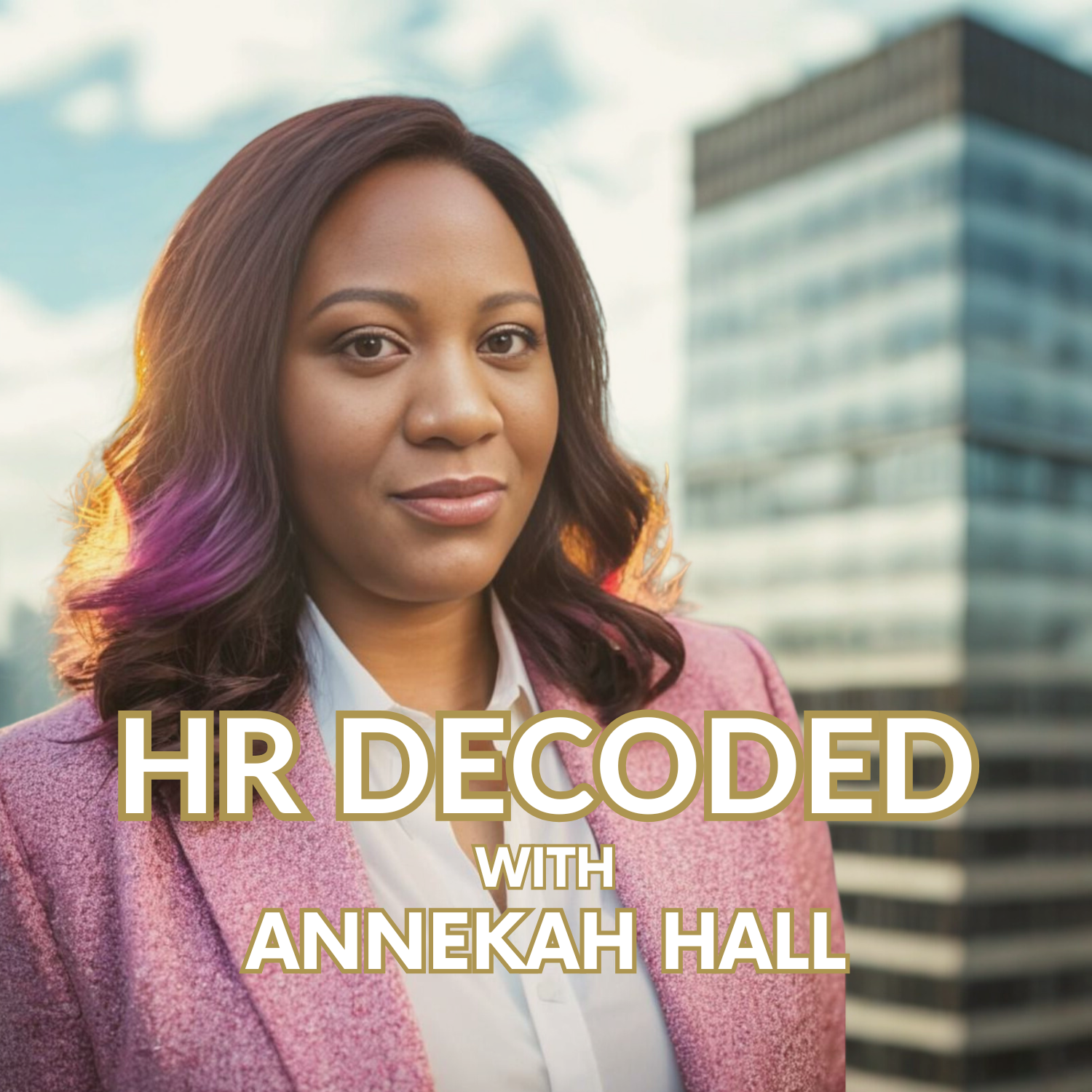
HR Decoded with Annekah Hall
Annekah Hall·20 episodes·Every few months·No new episodes since Feb 2026
Quick Facts
From the show
Annekah Hall decodes people ops for startup founders—hiring chaos, burnout, team drama, and the systems to fix them. Fractional COO wisdom weekly.
Episodes
Latest Episode
February 17, 2026 · 20m
If your meetings end with “let’s follow up” instead of clear owners and due dates, your team is accumulating execution debt every week. In this episode of HR Decoded, Annekah Hall breaks down why founder-led teams often mistake discussion for management—and how that creates status-meeting overload, rising escalations, and slower execution. This isn’t a motivation issue. It’s an operating system issue. You’ll learn the practical 5-step mechanism to turn meetings into shipped work using decision discipline, owner/date commitments, and weekly cadence mechanics that reduce founder dependency. What we cover Why meetings without owners and dates create silent execution debt The “Owner + Date” rule and how to enforce it The 3 concrete symptoms of meetings that go nowhere: status meeting tax escalation creep to CEO/founder declining trust in meetings from high performers Why this is a cadence and closure problem (not just a facilitation problem) The 5-step framework to make meeting output unavoidable: Define 3 valid meeting outputs (decision / commitment / escalation) Close every action with owner + deliverable + due date + escalation trigger Capture decisions same day to stop re-litigating Install weekly cadence (WBR + functional check-ins + monthly reset) Eliminate round-robin status meetings by moving updates async Real-world before/after outcomes from enforcing owner/date discipline Common objections and direct rebuttals A 30-day sprint to implement quickly without a major reorg Key takeaway You don’t need more meetings. You need meetings that produce decisions, commitments, and follow-through. When ownership is visible and dates are explicit, accountability becomes structural—not personal. Links 🌐 Website: 📅 Book your free 15-minute Bottleneck Triage: If this episode helped, follow HR Decoded and share it with a founder, operator, or people leader working through execution bottlenecks.
More Episodes
Feb 10, 2026 · 24m
If execution feels slower than it should in your company, this episode is for you.In founder- and CEO-led startups, the most expensive operational bottleneck is often not productivity—it’s Decision Cycle Time: how long it takes to make a decision and actually keep it decided. When decisions keep bouncing back to the top, teams escalate more, meetings multiply, and execution slows down across the business.In this episode of HR Decoded, Annekah Hall breaks down why this happens, how to spot it early, and how to install a practical decision system in 30–90 days—without adding unnecessary bureaucracy.What we coverWhy “slow execution” is often a decision design problem, not a talent problemThe 3 concrete symptoms of decision drag:Decisions stretching from hours to days/weeksMeetings ending without owners and datesFounder context-switching becoming the operating modelWhat Decision Cycle Time actually measures (and why “re-deciding” is expensive)The 3 root-cause gaps:Decision rightsDecision protocolsSpend/commitment thresholdsA practical 5-step mechanism to reduce escalations and speed execution:Identify decision categories clogging your weekAssign decision rights with clear DRIs and guardrailsInstall spend and commitment approval protocolsBuild a decision log to prevent re-decidingRun weekly cadence to move stuck decisionsReal-world before/after example of removing a CEO approval bottleneck in ~90 daysCommon objections and direct rebuttalsA 30-day quick-start sprint to implement immediatelyKey takeawayYour team cannot execute faster than your company can decide.If decision rights are unclear, everything routes upward.If approval rules are inconsistent, people escalate for safety.If decisions aren’t documented, you relitigate and lose momentum.Timestamps00:00 Intro + challenge to founders and leaders01:30 Why execution feels slow in founder-led startups05:30 3 symptoms of decision drag11:00 Defining Decision Cycle Time15:00 Root cause: design flaw, not character flaw20:00 The 5-step mechanism to fix it33:00 Real-world before/after case example38:00 Objections + rebuttals42:30 30-day quick-start sprint44:30 Final takeaway + CTALinks🌐 Website: https://www.hrdecoded.pro📅 Book a free 15-minute Bottleneck Triage: https://app.usemotion.com/meet/HRDecoded/BottleneckTriageIf this episode helped, follow the show and share it with a founder, operator, or people leader navigating execution bottlenecks.
Jan 13, 2026 · 25m
Decision rights are the silent killer of execution. In this episode, Annekah Hall breaks down the biggest signs your startup is stuck in decision gridlock—and why “collaboration” often hides a lack of ownership. You’ll learn the decision models that actually work in startups (DRI, decision lanes, disagree & commit rules, and decision logs), plus how to install decision clarity without creating bureaucracy.Want help installing decision rights and execution cadence in 90 days? Book a 15-minute call at hrdecoded.pro.
Jan 6, 2026 · 29m
Season 2 is here—and we’re back to the real work. In this episode, Annekah Hall breaks down the five “people problems” actually breaking startups in 2026—and why they’re rarely about the people. We cover founder bottlenecks, role confusion, untrained managers, performance avoidance, and hiring as a reflex—and then talk about a practical 90-day reset plan to install decision clarity, role outcomes, management rhythm, and real accountability.Want help installing operational clarity in 90 days?Book a 15-minute call at hrdecoded.pro.
Aug 26, 2025 · 18m
The digital nomad lifestyle that once symbolized freedom and the future of work is quietly declining. But here’s the truth: that decline could be hurting your business more than you realize.In this episode of HR Decoded, I dive into:Why digital nomadism is fading and what’s driving the declineThe hidden costs businesses face when they eliminate remote flexibilityFirsthand stories from my own experience living as a Digital NomadWhy founders should experiment with remote work frameworksHow flexibility can give you access to talent, insights, and retention advantages your competitors are missingFlexibility isn’t just about lifestyle. It’s a competitive advantage.If you’re ready to design a remote framework that fits your stage of growth, visit www.hrdecoded.pro and book a strategy call with me today.
Aug 19, 2025 · 19m
Leadership transitions can make or break a company. Waiting until someone resigns or retires to plan their replacement is a costly mistake that can derail growth, disrupt culture, and damage team morale.In this episode of HR Decoded, we explore how to approach succession planning as a proactive, ongoing strategy — not a last-minute scramble. You’ll learn how to identify future leaders, develop talent pipelines, and ensure knowledge transfer long before you need it.Whether you’re a founder, executive, HR leader, or manager, this episode will help you think ahead, protect your business from leadership gaps, and create opportunities for your people to grow.What You’ll Learn in This Episode:Why succession planning needs to start earlier than you thinkThe difference between replacement planning and succession planningHow to identify and prepare your next generation of leadersSteps for building a succession plan that actually worksHow to keep high-potential employees engaged in the processCommon mistakes leaders make when transitioning leadership rolesResources & Links:🌐 Learn more about HR Decoded consulting: www.hrdecoded.pro